
If you only add one product to your routine, make it sunscreen. Daily sun protection helps prevent sunburn, reduces the risk of skin cancer when used with other sun-safe habits, and slows the visible signs of aging — fine lines, uneven tone, and dark spots — that are largely driven by UV exposure.
Decoding the label
- SPF measures protection against UVB rays, the main cause of sunburn. SPF 30 filters about 97% of UVB; SPF 50 about 98%. Higher numbers help, but how much you apply matters more.
- Broad spectrum means the product also protects against UVA rays, which penetrate deeper and contribute to aging and pigmentation. Always look for it.
- Water resistant (40 or 80 minutes) tells you how long protection lasts while swimming or sweating. No sunscreen is truly “waterproof.”
Mineral vs. chemical filters
Mineral sunscreens use zinc oxide and/or titanium dioxide. They’re often preferred for sensitive, redness-prone, or acne-prone skin. Chemical (organic) filters absorb UV and tend to feel lighter. Both work — the best sunscreen is the one you’ll wear every day.
Match your sunscreen to your skin and day
- Oily or breakout-prone skin: Sun Shield Plus SPF 30 — a non-greasy, zinc-based formula made for oily and acne-prone skin.
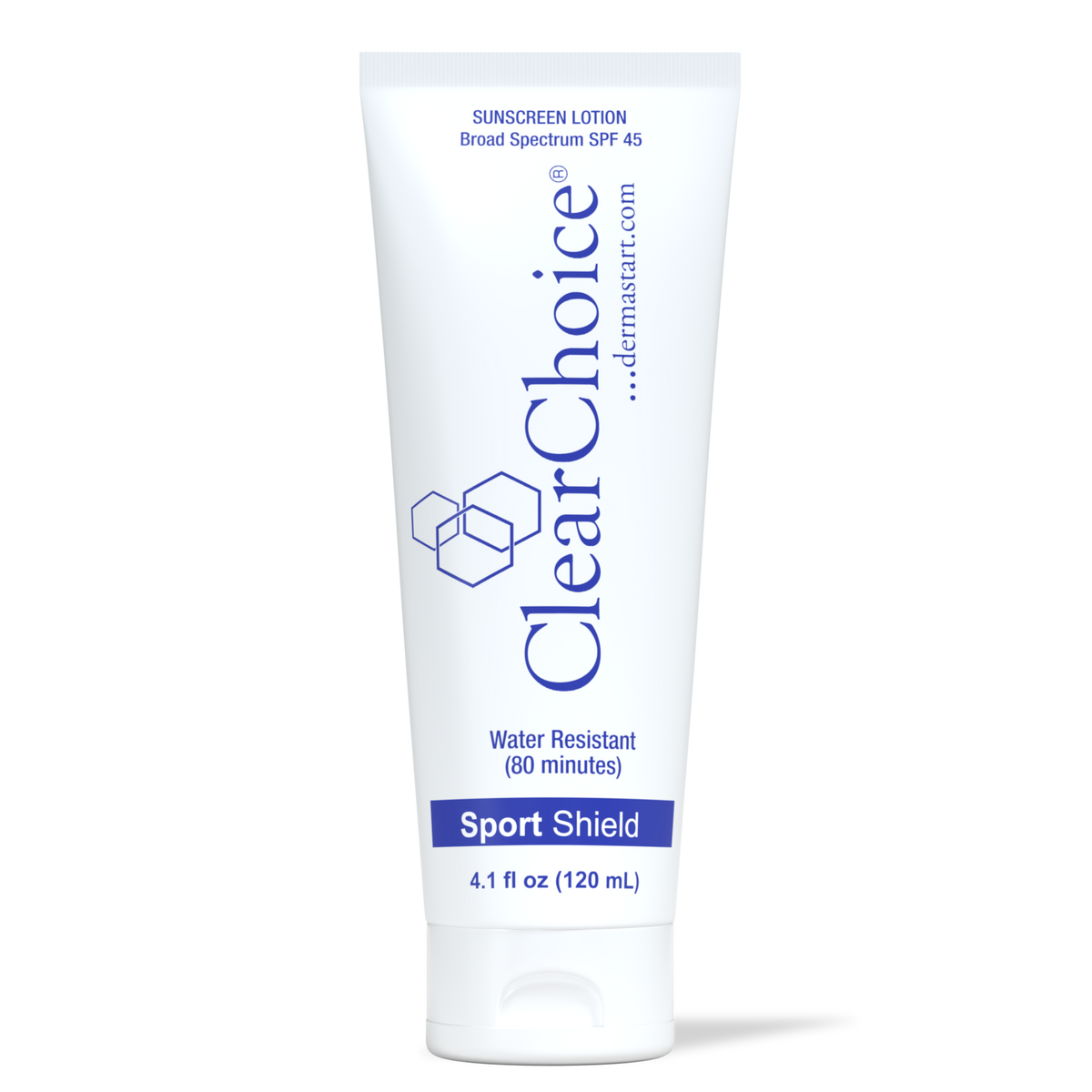
- Everyday wear and active days: Sport Shield SPF 45 — a sunscreen and light moisturizer in one, water and sweat resistant for 80 minutes and formulated not to run into your eyes. Also available in a travel-friendly 2 oz size.
- Long days outdoors: Sport Shield Extreme SPF 55 for higher protection when you’ll be in the sun for extended periods.
- Hydration plus antioxidants: Cover Shield combines UV defense with moisture and antioxidant support, and is water and sweat resistant up to 80 minutes.
How to apply it properly
- Use enough. About ½ teaspoon for the face and neck — most people use half that.
- Make it the last step of your morning skincare, before makeup.
- Don’t forget ears, neck, chest, and the backs of your hands.
- Reapply every 2 hours outdoors, and right after swimming, sweating, or towel-drying.
- Wear it year-round. UVA passes through clouds and car and office windows.
Sun-smart habits beyond sunscreen
Seek shade between 10am and 4pm, wear a wide-brimmed hat and UV-blocking sunglasses, and check your skin regularly. See a dermatologist about any spot that is new, changing, or doesn’t heal.
This article is for general information and is not medical advice. Use sunscreen as directed on the label. Ask a doctor before using on children under 6 months.