
When your skin is breaking out, it’s tempting to throw everything at it — scrubs, strong toners, three spot treatments at once. Usually that backfires. Over-cleansing and over-exfoliating strip the skin barrier, which can leave skin red, tight, and more prone to breakouts. The routines that work best are simple, consistent, and built around a few well-studied ingredients.
Why breakouts happen
Acne usually starts with four things working together:
- Excess oil (sebum), often influenced by hormones.
- Dead skin cells that don’t shed properly and clog the pore.
- Bacteria (C. acnes) that thrive in a clogged, oily pore.
- Inflammation, which turns a clog into a red, tender blemish.
A good routine addresses each of these without irritating your skin.
Step 1: Cleanse gently, twice a day
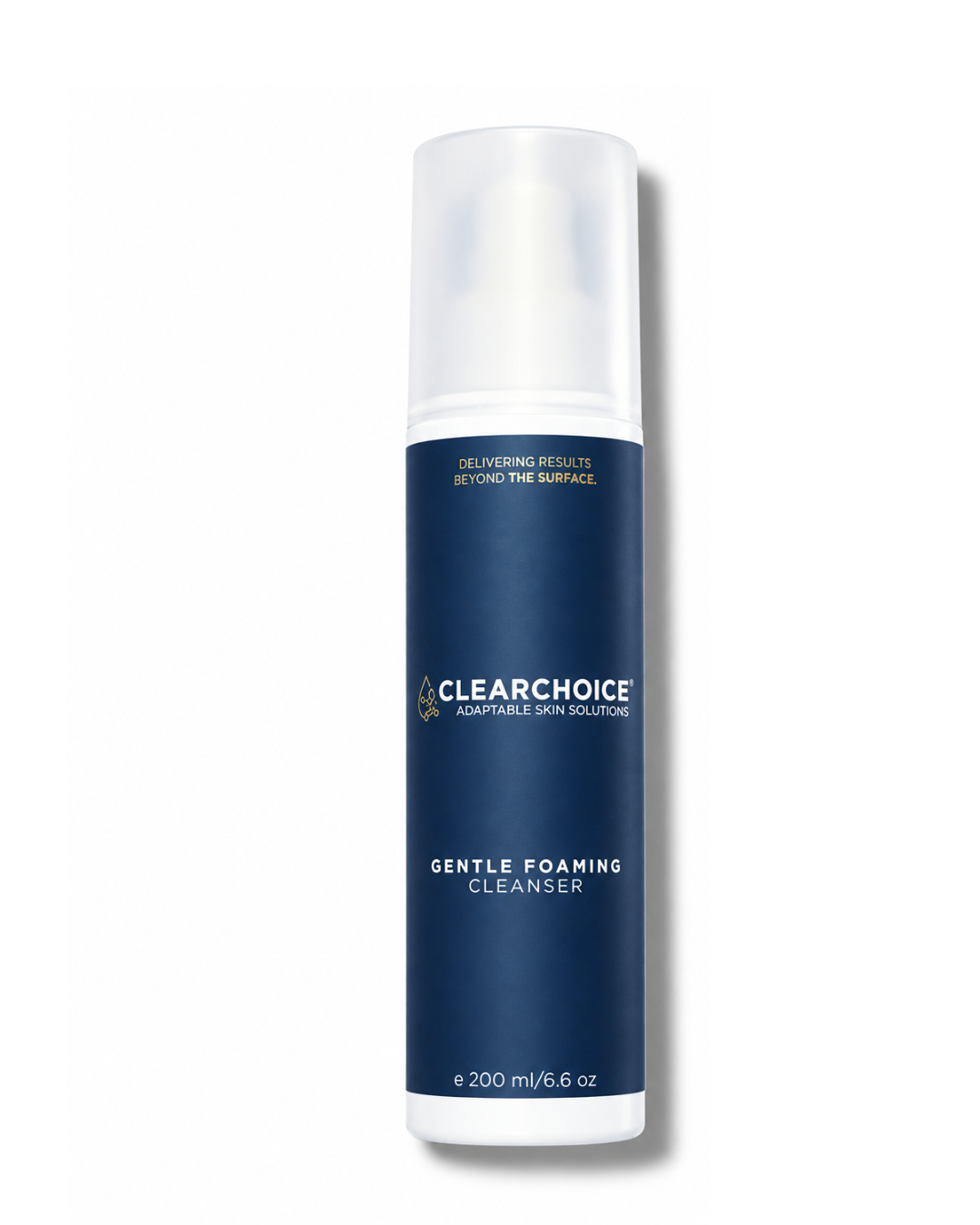
Use a mild, non-stripping cleanser morning and night, and after workouts. Skip harsh soaps and gritty scrubs. ClearChoice Gentle Foaming Cleanser is a soap-free gel designed for acne-prone and sensitive skin. If you want a little extra smoothing, Mandelic Cleanser combines mandelic acid and enzymes for gentle exfoliation as you wash.
Step 2: Use a pore-clearing treatment
Two ingredients have the strongest track record for breakouts:
- Salicylic acid (BHA) is oil-soluble, so it can get inside the pore and help loosen the oil and dead skin that cause blackheads and clogs. ClearBalance Pads deliver 2% salicylic acid in an easy swipe-on pad.
- Benzoyl peroxide helps reduce acne-causing bacteria. ClearChoice BP 8% is a liquid benzoyl peroxide treatment. It can bleach towels and pillowcases, so use white linens.
Start slowly — once a day or every other day — and increase as your skin tolerates it. Dryness and mild flaking at first are common; stinging or burning are signs to cut back.
Step 3: Moisturize (yes, even oily skin)
Acne treatments can be drying. A light, non-comedogenic moisturizer keeps your barrier healthy so treatments can do their job without irritation. If skin feels parched or flaky, a soothing cream such as Skin Rehab Cream helps restore comfort.
Step 4: Protect from the sun every morning
Many acne ingredients make skin more sun-sensitive, and UV exposure can darken the marks breakouts leave behind. Choose a sunscreen that won’t feel greasy. Sun Shield Plus SPF 30 is formulated for oily and acne-prone skin.
For the occasional blemish
Resist picking. A hydrocolloid patch like Undercover Patch covers the spot, absorbs fluid, and keeps fingers away while it heals.
A sample routine
| Morning | Evening |
|---|---|
| 1. Gentle cleanser | 1. Gentle or mandelic cleanser |
| 2. Light moisturizer | 2. Salicylic pad or benzoyl peroxide (not both at first) |
| 3. Oil-free sunscreen | 3. Moisturizer |
Be patient
Most acne routines take 6 to 12 weeks to show their full effect. Change one thing at a time so you can tell what’s working. If your acne is painful, cystic, scarring, or not improving, see a dermatologist or licensed esthetician — prescription options can make a big difference.
This article is for general information and is not medical advice. Patch-test new products and follow label directions. Stop use if severe irritation occurs.